
Ultrasound-guided TAP block
A practical ultrasound-guided TAP block guide for abdominal-wall analgesia, approach selection, needle and spread control, total-dose planning, and safety checks.
What the TAP block treats
A TAP block places local anaesthetic in the fascial plane between the internal oblique and transversus abdominis muscles. It provides predominantly somatic abdominal-wall analgesia for skin, muscle, and incisional pain; it does not directly treat visceral pain.
The painful region and sensory effect depend on the approach, exact needle-tip endpoint, anatomy, and observed spread. Match the block to the abdominal-wall component of the planned incision and reassess clinically; do not assume a universal dermatome range or duration.
Procedure-specific indications and limitations
A TAP block provides somatic analgesia of the anterior abdominal wall; its sensory coverage depends on the approach and spread of local anaesthetic. Integrate it into procedure-specific multimodal analgesia after distinguishing incisional or port-site pain from visceral and referred pain. A TAP block does not provide reliable visceral analgesia and does not directly target laparoscopic shoulder-tip pain.
- Elective caesarean section under neuraxial anaesthesia
A long-acting neuraxial opioid remains a recommended component of analgesia. When it is not used, TAP block is one of several recommended regional options, alongside local-anaesthetic wound infiltration or continuous wound infusion. The PROSPECT recommendation should not be extrapolated to emergency caesarean section or caesarean section under general anaesthesia.
- Laparoscopic cholecystectomy
Port-site local-anaesthetic infiltration or intraperitoneal local-anaesthetic instillation are recommended first. TAP block is a second-line option in selected clinical situations, taking account of operator expertise, expected pain severity, and the total local-anaesthetic dose. It addresses somatic abdominal-wall pain but does not replace treatment of visceral or referred shoulder-tip pain.
- Laparoscopic colorectal surgery
PROSPECT does not recommend routine truncal blocks, including TAP block, because procedure-specific evidence is inconsistent. Surgical local-anaesthetic infiltration of the port sites is recommended. TAP block should not be presented as a standard component of this pathway.
- Open colorectal surgery
Continuous thoracic epidural analgesia remains the first-line regional technique. When it is not feasible or is contraindicated, PROSPECT recommends a preoperative bilateral TAP block. This recommendation specifically applies to bilateral block performed before open surgery.
Positioning, scan, and needle control
For a lateral scan, position the patient supine or in lateral decubitus as needed to expose and flatten the flank. Reconfirm the planned side and incision before preparing the field.
Choose a high- or lower-frequency transducer according to tissue depth. Pre-scan transversely between the costal margin and iliac crest and adjust the probe until all three abdominal-wall muscle layers and the deep boundary are distinct.
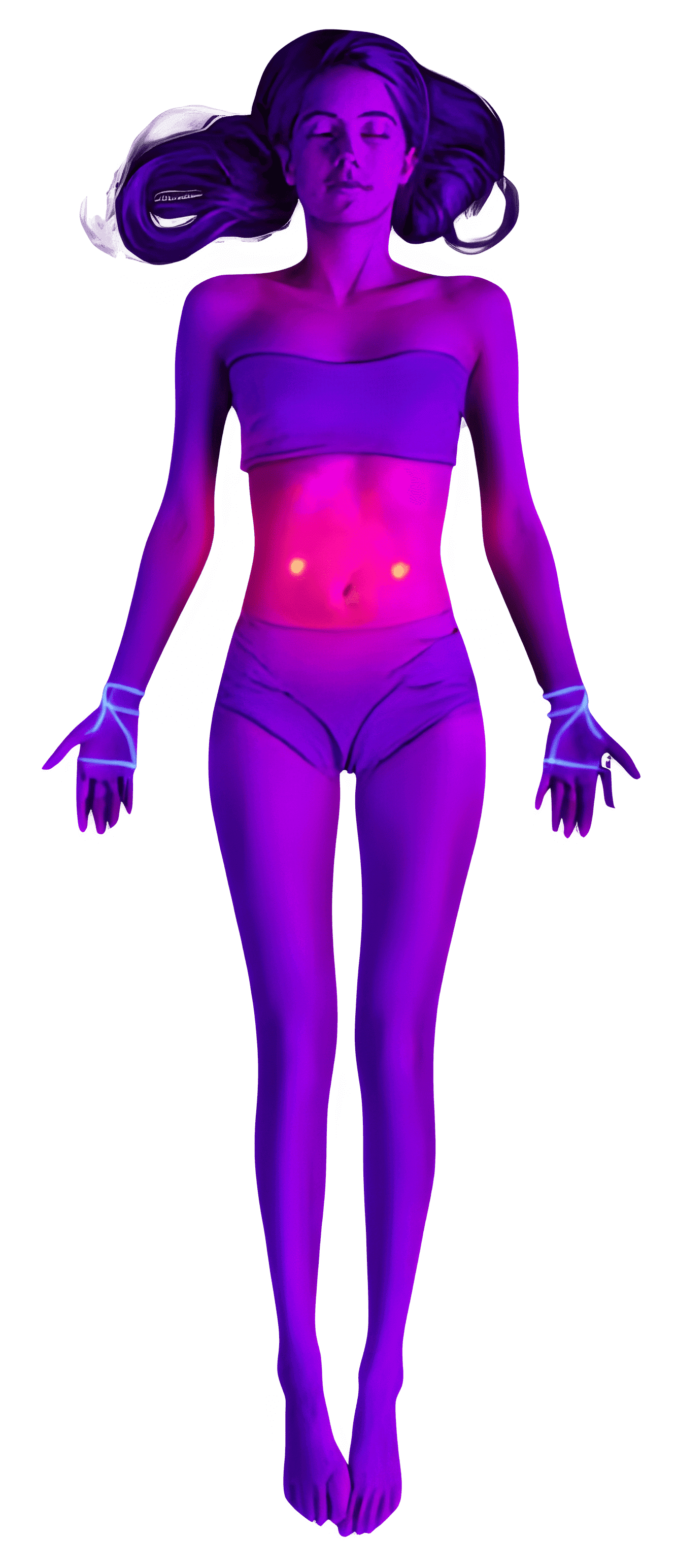
Identify the layers: From superficial to deep, find the external oblique, internal oblique, and transversus abdominis muscles and their fascial interfaces.
Identify the deep boundary: Trace preperitoneal fat, parietal peritoneum, and moving bowel or other viscera before advancing the needle.
Advance in plane: Use an in-plane path when feasible, keep the needle tip continuously visible, and stop to reacquire it before any further advance or injection if it is lost.
Hydro-localize: Use a small incremental test injection to confirm the plane. If local anaesthetic is used, count it in the total dose; correct placement produces visible separation between internal oblique and transversus abdominis.
Inject and reassess: If a muscle swells or spread is superficial, stop and reposition the tip. Aspirate and inject the remaining dose incrementally only while the tip and intended spread remain visible.
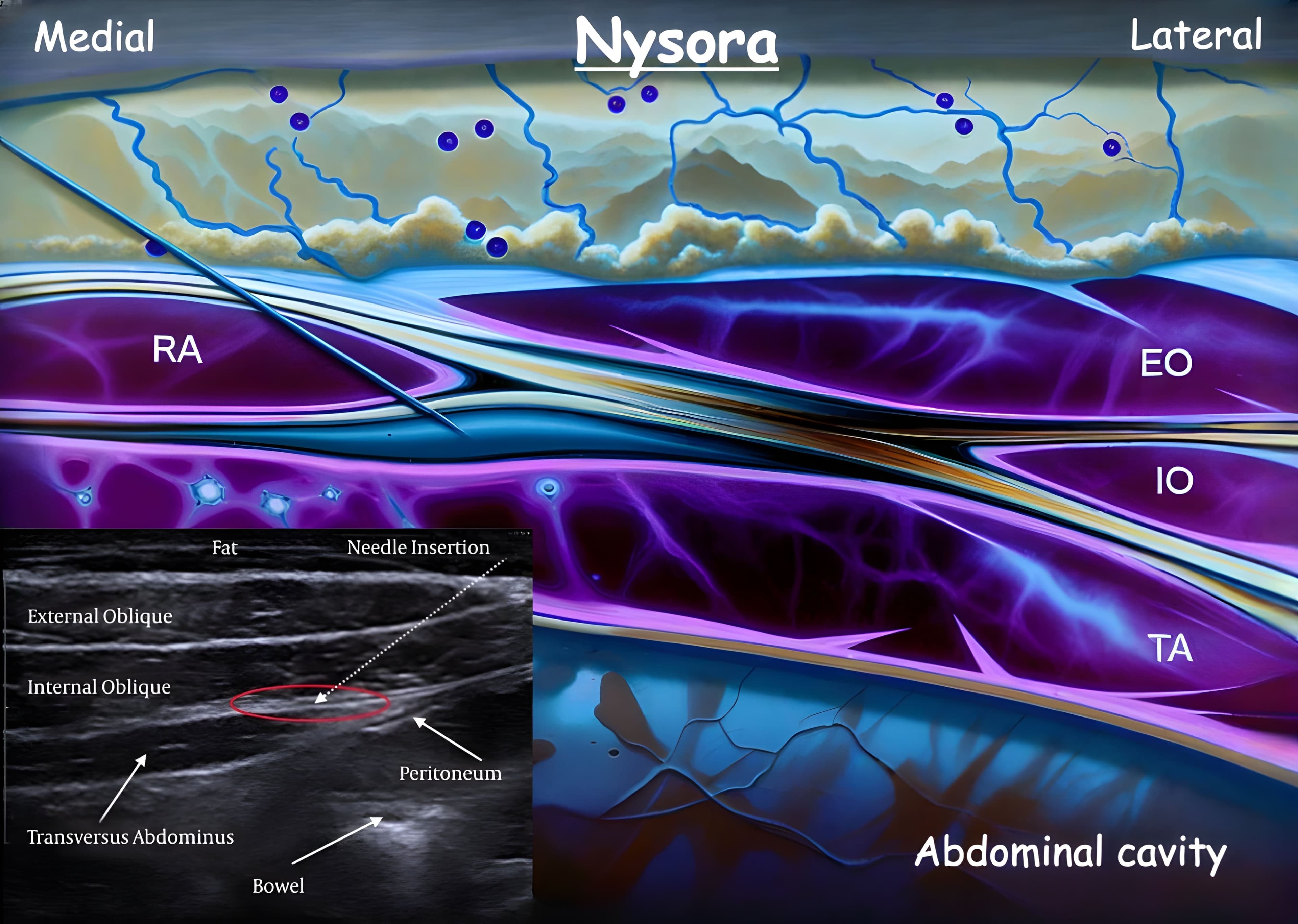
- Needle path
Plan a shallow trajectory that keeps the entire shaft and tip within the imaging plane and away from the peritoneum and viscera.
Do not use tactile fascial pops as confirmation of needle-tip position; confirm the endpoint on the ultrasound image.
- Plane opening and correction
A lens-shaped opening of the IO–TA plane supports correct deposition. Intramuscular swelling or absent plane separation is a reason to stop, reposition, and recheck.
Maintain visible longitudinal spread rather than relying on a presumed dermatome or a fixed volume.
- Bilateral and multi-source plan
Repeat the full anatomy and needle-tip check on each side; a satisfactory image on one side does not confirm the other.
Before every additional aliquot, reconcile the volume and milligram contribution with all local anaesthetic already given or still planned.
Choose the approach for the painful region
Approach names describe anatomical needle-tip locations, not guaranteed clinical coverage. Document the actual endpoint and select it to match the incision and abdominal-wall pain source.
- Lateral or midaxillary TAP
Identify external oblique, internal oblique, and transversus abdominis between the costal margin and iliac crest. A midaxillary TAP endpoint is specifically between internal oblique and transversus abdominis at the midaxillary line; use it for the matching lateral or lower abdominal-wall region and verify the sensory result.
- Subcostal TAP
Follow the target plane along the medial costal margin in the upper quadrants of the anterior abdominal wall. The layers and nearby organs change along this course, so rescan continuously and do not assume uniform upper-abdominal coverage.
- Posterior terminology
The ASRA/ESRA consensus harmonized the historical posterior TAP and lateral quadratus lumborum descriptions under lateral quadratus lumborum block. If a posterior window is used, record the actual needle-tip anatomy and do not promise broader or visceral analgesia.
- Lower abdomen and named nerve targets
Near the anterior superior iliac spine, an ilioinguinal–iliohypogastric nerve block is a distinct named target near those nerves in the IO–TA plane. Do not relabel a nerve-targeted lower-quadrant injection as generic TAP or assume it covers the whole lower abdomen.
Volume planning and total local-anaesthetic dose
total dose (mg) = concentration (mg/mL) × total volume (mL)
Adult injectate volume is approach-, target-, anatomy-, laterality-, product-, and concentration-dependent. No universal adult volume is given here; choose the plan that produces visible spread while staying within the patient-specific total milligram limit and applicable product or local guidance.
Before injection, calculate the total dose in mg for both sides and all other local-anaesthetic sources in the perioperative plan, including surgical infiltration, other blocks, and any local anaesthetic used for hydro-localization. Recalculate if the plan changes.
Pediatric scope: the cited ESRA/ASRA advisory addresses local-anaesthetic and adjuvant dosing for regional anaesthesia in children; do not extrapolate an adult TAP volume to children or apply the pediatric guidance to adults.
The advisory reports that high-level evidence for pediatric regional-block dosing is unavailable. This guide therefore gives no fixed pediatric TAP dose; use the relevant pediatric recommendation, product information, local protocol, and total all-source milligram calculation.
TAP and rectus sheath blocks can produce rapid systemic absorption and, in some patients, systemic local-anaesthetic concentrations above commonly accepted toxicity thresholds. Treat the measured concentration finding as a safety signal, not as a new dose limit.
Use appropriate monitoring and maintain immediate readiness to stop local-anaesthetic injection, call for help, and follow the current ASRA LAST response checklist.
Ultrasound and safety checks
- Keep the needle tip visible
Optimize probe pressure, depth, focus, beam angle, and needle entry point until the tip is distinct. Stop advancement and injection immediately whenever the tip is lost.
- Correct the spread
Visible separation of internal oblique from transversus abdominis confirms the lateral TAP plane. Intramuscular swelling, superficial tracking, or absent separation means the tip must be repositioned before continuing.
- Protect deep structures
Identify the parietal peritoneum and viscera throughout the scan, and include the liver or spleen when relevant to the approach. Keep the needle path and injectate superficial to these structures.
- Perform a patient-specific bleeding assessment
For surgical patients aged 16 years or older taking antiplatelet or anticoagulant drugs, assess the site, depth, compressibility, consequences of bleeding, drug and dose, renal function, combinations, traumatic puncture, and any catheter insertion or removal.
Ultrasound guidance does not shorten prescribed antithrombotic intervals. Do not treat TAP as automatically acceptable simply because a neuraxial technique is unsuitable.
- Watch for systemic absorption
Account for all local anaesthetic, monitor according to the drug, dose, patient, and setting, and remain alert for neurological or cardiovascular features of local-anaesthetic systemic toxicity.
- Be ready for LAST
Keep the current ASRA checklist and local rescue resources immediately available. If LAST is suspected, stop local-anaesthetic administration, call for help, and follow the checklist.
TAP block safety scan
Selection: Confirm that the relevant pain component is somatic abdominal-wall pain and that TAP has a supported role in the exact procedure pathway.
Coverage: Match the approach and needle-tip endpoint to the incision; do not assume universal dermatomal coverage, duration, visceral analgesia, or shoulder-tip analgesia.
Technique: Identify external oblique, internal oblique, transversus abdominis, parietal peritoneum, and viscera; keep the tip visible and require correct plane separation.
Dose: Calculate total milligrams across both sides and every other local-anaesthetic source, count test aliquots, and keep pediatric guidance within its pediatric scope.
Bleeding: Complete the patient-, drug-, site-, compressibility-, and consequence-specific assessment; ultrasound does not make an unsuitable plan acceptable.
LAST: Anticipate systemic absorption, use appropriate monitoring, and keep the current ASRA response checklist and rescue resources ready.
Sources
1. Supporting source
Ultrasound-Guided Transversus Abdominis Plane (TAP) Block
NYSORA · Published 2022-05-13; page metadata modified 2026-04-14
Accessed Aug 1, 2026
2. Primary source
Standardizing nomenclature in regional anesthesia: an ASRA-ESRA Delphi consensus study of abdominal wall, paraspinal, and chest wall blocks
American Society of Regional Anesthesia and Pain Medicine / European Society of Regional Anaesthesia and Pain Therapy · First published 2021-06-18
Accessed Aug 1, 2026
3. Supporting source
How I Do It: TAP Block
American Society of Regional Anesthesia and Pain Medicine · Published 2019-08-07
Accessed Aug 1, 2026
4. Primary source
Pain management after elective caesarean section under neuraxial anaesthesia: an updated systematic review and procedure-specific postoperative pain management (PROSPECT) recommendations
Crowe et al. / PROSPECT Working Group / ESRA · Anaesthesia 2026;81:819–839; first published 2026-02-15
Accessed Aug 1, 2026
5. Primary source
Pain management after laparoscopic cholecystectomy: A systematic review and procedure-specific postoperative pain management (PROSPECT) recommendations
Bourgeois et al. / PROSPECT Working Group / ESRA · European Journal of Anaesthesiology 2024;41(11):841–855; published 2024-08-12
Accessed Aug 1, 2026
6. Primary source
PROcedure-SPECific postoperative pain management guideline for laparoscopic colorectal surgery: A systematic review with recommendations for postoperative pain management
Lirk et al. / PROSPECT Working Group / ESRA · European Journal of Anaesthesiology 2024;41(3):161–173
Accessed Aug 1, 2026
7. Primary source
Pain management after open colorectal surgery: An update of the systematic review and procedure-specific postoperative pain management (PROSPECT) recommendations
Uten et al. / PROSPECT Working Group / ESRA · European Journal of Anaesthesiology 2024;41(5):363–366
Accessed Aug 1, 2026
8. Supporting source
Regional anaesthesia in patients on antithrombotic drugs: Joint ESAIC/ESRA guidelines
European Society of Anaesthesiology and Intensive Care / European Society of Regional Anaesthesia and Pain Therapy · 2022
Accessed Aug 1, 2026
9. Supporting source
The European Society of Regional Anaesthesia and Pain Therapy/American Society of Regional Anesthesia and Pain Medicine Recommendations on Local Anesthetics and Adjuvants Dosage in Pediatric Regional Anesthesia
Suresh et al. / ESRA / ASRA · Pediatric practice advisory; Regional Anesthesia and Pain Medicine 2018;43(2):211–216; published 2018-02-01
Accessed Aug 1, 2026
10. Supporting source
Systematic review of the systemic concentrations of local anaesthetic after transversus abdominis plane block and rectus sheath block
Rahiri et al. · British Journal of Anaesthesia 2017;118(4):517–526; published 2017-04-01
Accessed Aug 1, 2026
11. Primary source
Checklist for Treatment of Local Anesthetic Systemic Toxicity
American Society of Regional Anesthesia and Pain Medicine · Version 1.1; published 2020-11-01
Accessed Aug 1, 2026